An Alternate Route to Your Dream College?
You refresh the portal the moment decisions are supposed to drop, just as you have every day for the past week, even though nothing changes—until it does. The page loads. There's a bold, congratulatory headline—then a second line that doesn't match the acceptance you imagined. Not Welcome to the Fall Class.
Welcome to PACE: online this semester, campus next.
For a few seconds, it reads like rejection wearing a nicer outfit.
That's roughly what happened to Justin Hellman, a recent graduate from Park Ridge, New Jersey, who applied to the University of Florida expecting a traditional admission decision. Instead, he was admitted through PACE—Pathway to Campus Enrollment—a program that begins with one semester online before students transition to campus, ultimately earning the same degree as students who started in the fall. He later said he cried when he first read the decision. Twenty minutes later, his thinking had shifted: "I want to be a Florida Gator." This fall, he'll share an apartment with three other PACE students, including Joshua Baltimore, who moved from Houston to begin the same journey.
PACE began with roughly 250 students in 2015 and grew to nearly 3,000 students by fall 2024. Texas A&M offers a comparable pathway, while Illinois, Georgia Tech, and UCF have introduced similar programs. Many students admitted through these pathways scored in the 95th percentile or higher on the SAT or ACT—the same high-achieving applicants who were competitive for traditional admission. As these programs have expanded, they've become another reminder that selective admissions are often more nuanced than a simple admit-or-deny decision.
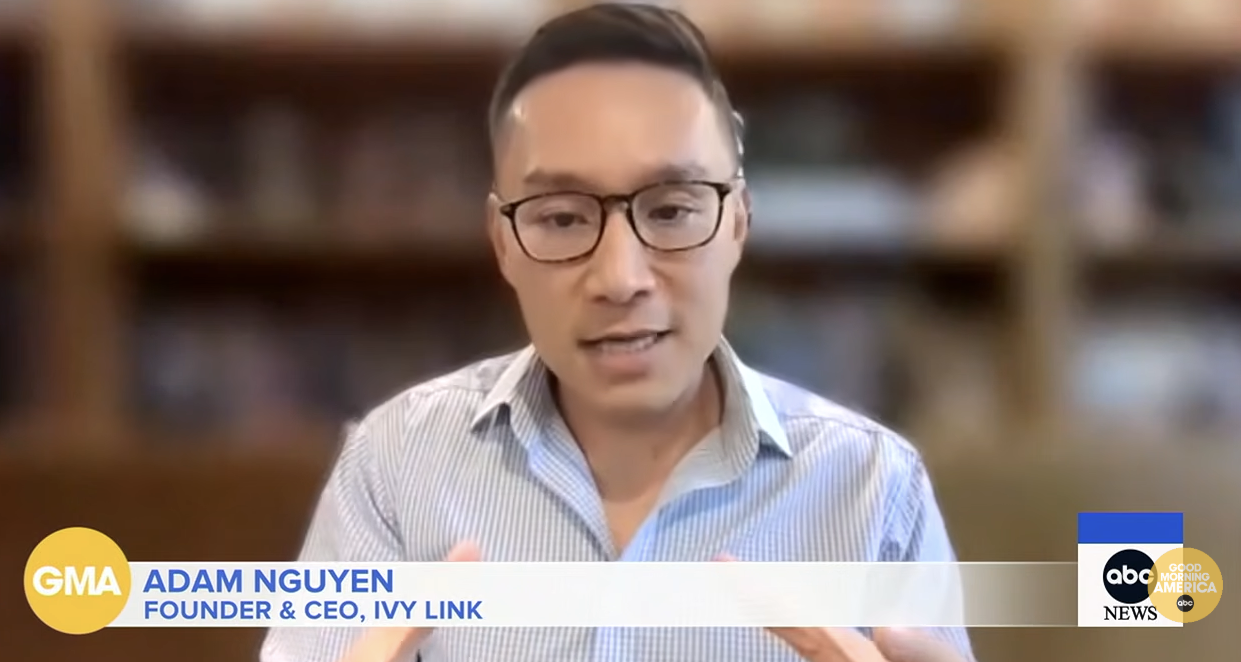
So why are programs like these becoming more common? Adam Nguyen, Founder & CEO of Ivy Link, was featured as a source in Wall Street Journal’s June reporting on pathway admissions and later discussed the topic on Good Morning America . His perspective is that universities are balancing enrollment capacity and revenue, allowing them to shape their incoming class while still admitting highly qualified applicants through an alternative entry point.
What often separates students admitted for the fall from those admitted through PACE may have less to do with any one application than with the realities of a particular admissions cycle. Enrollment targets shift. Programs fill at different rates. Institutional priorities evolve. Even exceptionally qualified applicants can receive different outcomes based on factors they never see. That's one of the biggest misconceptions about college admissions: there isn't a formula or checklist that guarantees admission. The process is contextual—shaped by enrollment modeling, institutional priorities, program balance, and simply how much room exists in a given class that year. None of that is visible while you're building your college list, and none of it stays the same from one admissions cycle to the next.
For students applying this year, programs like PACE are worth understanding. They are legitimate pathways that have worked well for many students, and Justin Hellman will be a Florida Gator either way. But the broader takeaway isn't about PACE itself. It's that the strongest admissions outcomes rarely begin in senior year. They are built over time through academics, testing, extracurriculars, and intentional planning that gives students more options long before admissions decisions are released.
If you're looking to build a thoughtful, long-term admissions strategy, Ivy Link works with students years before applications are submitted—helping them strengthen their academics, testing, extracurricular profile, and overall admissions positioning. Contact Ivy Link today to learn how intentional planning can make a meaningful difference.