Inside Dartmouth’s Class of 2030 Early Decision Review
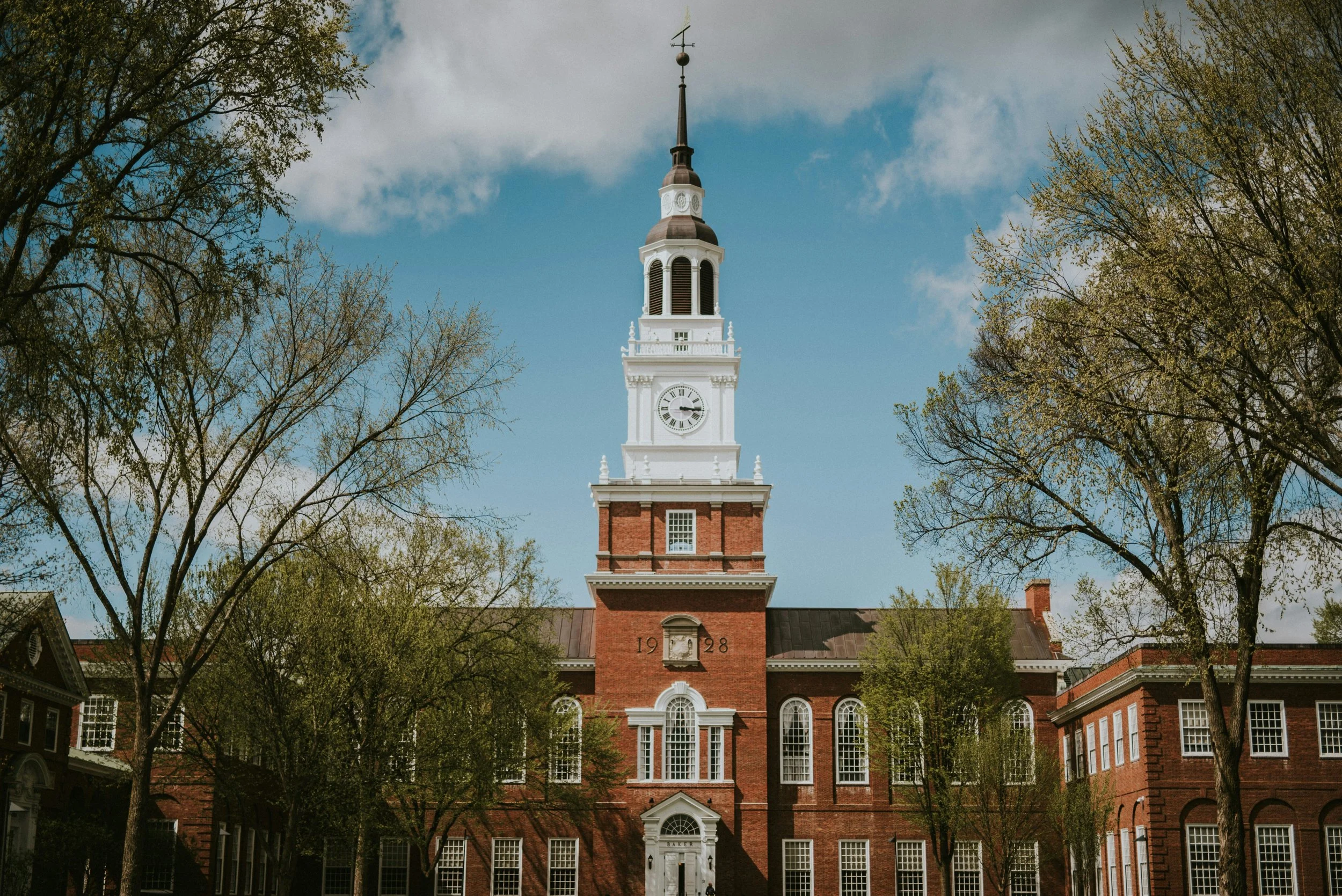
If Dartmouth College is on your list, here’s what the Class of 2030 Early Decision results are really telling you.
Dartmouth released decisions, welcomed the first members of the incoming class—and declined to publish application totals or acceptance rates. Instead, the school focused almost entirely on who these students are and why they belong.
So let’s walk through what actually matters, in the same order admissions does.
Start With the Baseline: Academics
Nearly every student admitted early was academically strong in context:
98% ranked in the top 10% of their high school class (where rank was reported)
93% submitted SAT or ACT scores placing them in the top 25% of test-takers at their own high school
That phrasing matters.
Dartmouth isn’t asking whether you’re perfect. They’re asking whether you made full use of the academic environment you were given—course rigor, performance, and consistency over time. Strong grades and solid testing don’t make you stand out at this level—but they are the threshold.
How Elite Universities Actually Read Your Record
(This Is the Part Most Students Miss)
Schools at this caliber do not evaluate grades, scores, or course rigor against a national ideal of what a “top student” should look like. They evaluate you relative to your school.
Admissions officers are asking:
What opportunities were available at this high school?
Did this student stretch within their environment—or stay comfortable?
Do the transcript and scores together suggest readiness for Dartmouth’s classrooms?
This is why Dartmouth reports academic strength based on each student’s school context, not raw national percentiles.
And this aligns closely with what Ivy Link CEO and founder Adam Nguyen has explained publicly for years: at the Ivy level, admissions isn’t about stacking students against each other in the abstract. It’s about understanding trajectory—how far a student pushed within their system, and whether that trajectory suggests they’ll thrive in a demanding academic environment.
A student from a small public school with limited advanced offerings isn’t expected to look like a student from a private feeder with dozens of APs. What matters is how intentionally you used what was available to you.
Once admissions officers are confident you can handle the work, they move on to a harder question: who are you becoming—and why does Dartmouth make sense for that path?
About Testing — Let’s Be Precise
Dartmouth is has reinstated its testing requirement.
The SAT/ACT requirement was reinstated beginning with applicants to the Class of 2029 and remains in place for the Class of 2030. Admissions leadership has been clear about why: test scores help confirm academic readiness across very different schools, grading systems, and levels of access.
What Dartmouth is not doing is chasing extremes.
Scores are read in context. A strong score for your school reinforces what your transcript already suggests—that you’re prepared for the classroom. That’s the role of testing here, not prestige or perfection.
Where Decisions Are Actually Made: Your Story
Once you clear the academic bar, Dartmouth’s attention shifts.
Admissions leaders emphasized the writing in this year’s early pool—not because it was flashy, but because it was specific. They highlighted students who could clearly explain:
why Dartmouth made sense for them,
how their interests developed over time, and
what they hoped to explore next.
This is where evaluation becomes comparative.
At the most selective level, admissions isn’t about checking boxes. It’s about whether your application reads as intentional. Coursework, activities, and essays should feel like they belong to the same person—and are heading somewhere real.
Generic excellence doesn’t hold attention here. Direction does.
At Ivy Link, this is exactly where the work happens. Drawing on firsthand experience inside Ivy-level admissions offices, students are guided—often years before they apply—to build academic and extracurricular profiles that point somewhere specific. By the time Early Decision is on the table, the application already makes sense.
A Few Other Signals Worth Noticing
Dartmouth also shared that:
The target class size remains around 1,175 students
Roughly 20–25% of early admits are from low-income backgrounds
18% are first-generation college students
Students come from 48 states, D.C., and 44 countries
At the same time, Dartmouth chose not to publish Early Decision acceptance rates. Officially, that’s about reducing stress. Practically, it reinforces something important: Dartmouth doesn’t want you reverse-engineering odds. They want you focusing on readiness and fit.
What This Means for You
If you’re serious about Dartmouth, this is what preparation actually looks like:
Grades that place you near the top of your school,
Required test scores that confirm readiness in context, and
Essays that show thought, specificity, and real reasons for choosing Dartmouth—not polish for its own sake.
Dartmouth isn’t trying to assemble the most flawless class. They’re assembling a class of students who know why they’re there—and can back that up on paper.
That’s the standard reflected in the Class of 2030. And that’s the standard you should be preparing to meet.