Tips for a Compelling Statement of Persuasion
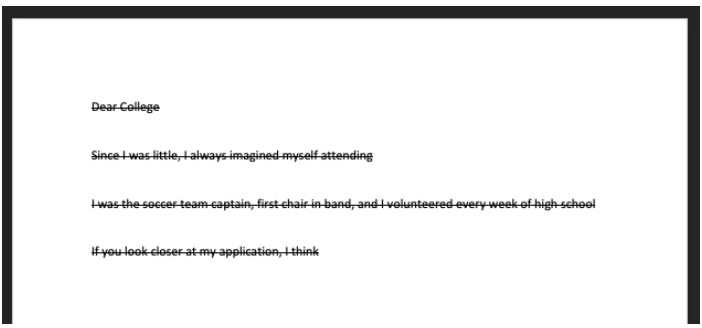
If you have been deferred to Regular Decision after applying Early Decision/Early Action, or you end up getting waitlisted in the Regular Decision round, there is only one thing left to do to seriously impact your admissions chances: write a Statement of Persuasion. Sometimes referred to as a “Letter of Enthusiasm” or “Letter of Continued Interest,” the Statement of Persuasion is your last chance to show the school what you would add to the campus community—your unique perspective and talents. Here are a few tips to get you started:
Don’t simply tell admissions officers that College X is your dream school. The fact that you applied early or are writing after a deferral already shows interest. What admissions needs now is evidence of fit, not volume of enthusiasm. Use one or two specific academic or community touchpoints that genuinely connect to you (a department strength, a research center, a program model, a campus culture detail you can explain) and make the connection personal and concrete. Generic praise reads like noise—polished, predictable, and easy to forget.
Don’t write “fluffy” sentences that could belong to anyone. Clean grammar and a standard structure are not the point—most students can produce that. What separates a persuasive letter is layered thinking: genuine emotion, careful introspection, and a clear sense of personal growth. Avoid broad claims like “I’ve always been passionate about…” unless you immediately anchor them in specifics (a project, a question you pursued, a decision you made, a measurable outcome). If your letter feels like it’s heading toward a neat, inspirational ending where everything is resolved, pull back. The strongest letters don’t wrap life up with a bow—they show maturity through honesty, direction, and momentum.
Don’t brag. Now is not the time to list off high school accomplishments you left off the list the first time. If it wasn’t vital enough to go in the original application, then it isn’t of interest to them now. The exception is a meaningful update that changes the file: a new result, a final product, a verified recognition, or a concrete next step you’ve already taken. Think in terms of substance over spotlight. A single strong update, framed with context and reflection, can do more than a paragraph of “wins.”
Don’t exaggerate. Unless it’s their first day on the job, the admissions officer is going to see right through this. Exaggeration doesn’t just weaken credibility—it signals poor judgment. The goal is to sound like a real person who understands what they’ve done and what it means. Aim for precise language, accurate scope, and verifiable details. Persuasion works when the reader trusts you.
Don’t outsource your voice to AI—or let it flatten your thinking. AI can produce something readable, structured, and “fine,” but that’s exactly the risk: it often sounds overly predictable, generic, and thin on real detail. If you use AI at all, treat it like a starting block—not the author. The safest approach is to supply your own specifics, restructure heavily, and rewrite most of the language so the letter sounds like you and contains details only you could write. Admissions officers respond to depth, not polish.
These are just a few tips. Ultimately, we cannot tell you what to write. How you frame your letter is up to you. Just make sure you express, in a compelling manner, what you could add to the college community—and do it with specificity, restraint, and real thought. That is what they are interested in.
What we’ve described above is not an easy task, so don’t be afraid to ask for help! Ivy Link advisors have worked with many students to successfully turn a deferment into an acceptance, including shaping Statements of Persuasion that sound human, specific, and genuinely persuasive—not generic or overly “perfect.” Contact us below to get started.