Your Last SAT Before College Applications: Choosing the Right Test Date
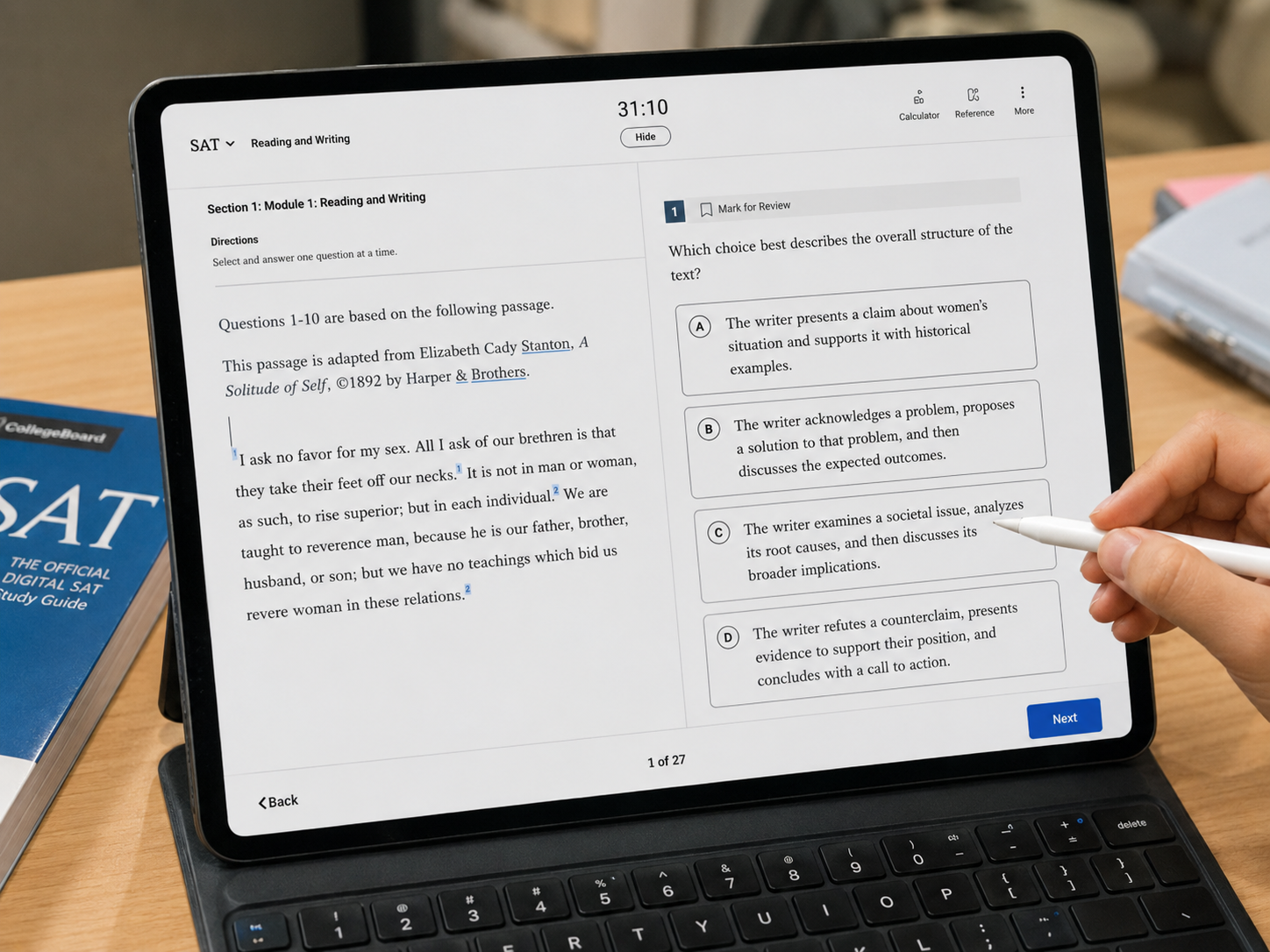
If you're a rising senior, the SAT date you choose this fall isn't just a test date — it's the deadline that determines whether your score exists in time to matter. Picking the wrong one doesn't just mean retaking a test; it can mean applying without a score you were counting on submitting. And the clock is closer than it feels: if August 22 is even a possibility for you, its registration window closes in early August — that's a decision for this week, not next month.
College Board's confirmed dates for the 2026–2027 cycle are August 22, September 12, October 3, November 7, and December 5, 2026, followed by March 6, May 1, and June 5, 2027. Each comes with its own registration deadline roughly two to three weeks earlier, and a later change-and-late-registration window that costs extra and offers fewer test center choices.
The date that matters most comes down to which application round you're using. College Board releases scores 2 to 4 weeks after a weekend test, then takes another 10 to 12 days to reach your colleges once you send them — three to five weeks total. Applying ED or EA to a November 1 deadline? October 3 is your last safe date; even November 7 scores would cut it close or arrive late, though some schools accept self-reported scores at submission with official reports to follow. Regular Decision only? You have more room — December 5 scores land comfortably ahead of January deadlines, and even March testing works for schools with February or rolling deadlines.
There's a second decision buried in the date question: whether to submit a score at all. Test-optional policies are still shifting — some schools have gone permanently test-optional, and others have reinstated requirements outright. Yale is the most recent example: as of a May 2026 announcement, Yale now requires an SAT or ACT score from every applicant for this exact cycle, ending the test-flexible policy that had let applicants substitute AP or IB scores instead. If Yale is on your list, this isn't a strategic call at all — a score is required, full stop. Princeton, meanwhile, has announced a testing requirement that takes effect the cycle after this one, so it doesn't apply to your application. Treat "optional" carefully: at the most selective schools, plenty of things on the application are technically optional, and the strongest applicants tend to go beyond the minimum wherever it's worth it, not treat every optional section as one less thing to do. Where a school is genuinely test-optional, the decision to submit or withhold is case by case: it depends on that school's published score range, how the rest of your application looks, and how that particular school has historically treated non-submitters — a call worth making school by school with an advisor rather than by a blanket rule. Your right test date factors into that too, since it determines whether a score exists in time to even be part of the conversation.
That leaves two realistic paths: one more attempt in September or October if you're applying early anywhere, or a single well-prepared attempt in December for a Regular-Decision-only list. Spreading test dates thin across the fall rarely beats concentrating prep on one well-chosen date.
Test scores are one of the few places in this process where the result tracks hours of practice, not a family's budget for curated extracurriculars or niche coaching. Protect that runway — choose the date strategically, not as an afterthought.
If you're not sure which test date actually fits your list of schools and your application round, that's worth mapping out before you register. Contact Ivy Link below to build a testing plan around your specific deadlines